
In this report
Peloton is making a fairly unambiguous bet on running.
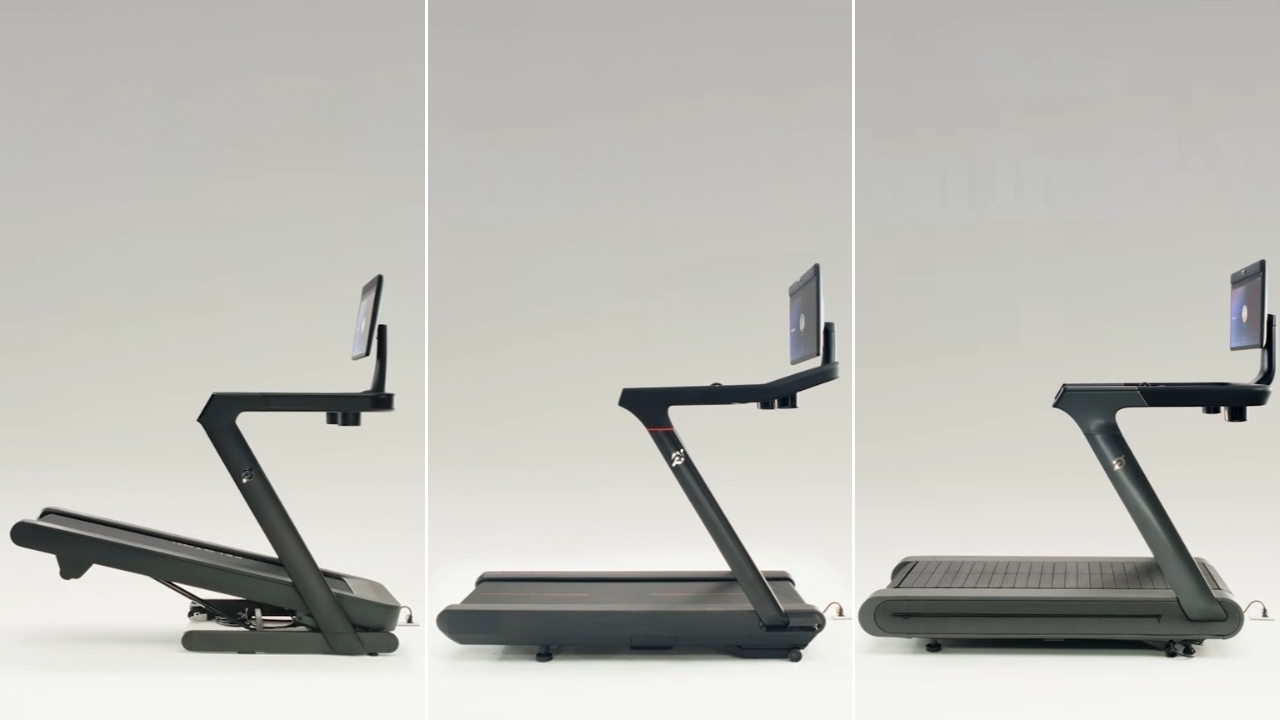
On September 22, the company announced three new treadmills: the Peloton Tread Flex, Tread Vision, and Tread+ Vision, all scheduled to go on sale in the United States and Canada on October 1, 2026.
The launch also brings new running features to Peloton IQ, including personalized pace targets, heart-rate-zone workouts, running-form analysis, and the ability to recreate outdoor routes on a treadmill, according to Peloton’s launch announcement.
I find the timing more interesting than the fact that Peloton has new hardware.
Running is having an unusually strong cultural moment. Race participation has been climbing, running clubs have become social communities, and younger adults appear increasingly interested in organized races.
Peloton, meanwhile, is trying to prove that its future is much larger than the stationary bike that made the company famous.
Three treadmills at three very different prices suggest Peloton sees running as one of its best opportunities to do that.
Peloton Now Has a Treadmill for Three Different Buyers
The easiest way to understand the new lineup is to look at the price ladder.
Model
Starting U.S. Price
What Stands Out
Peloton Tread Flex
$2,195
Foldable design, quieter motor, smaller footprint
Peloton Tread Vision
$3,495
Movement-tracking camera, Run Analysis, upgraded cushioning
Peloton Tread+ Vision
$6,695
Slat belt, camera-based analysis, Sled Mode
The Tread Flex is the most strategically interesting of the three to me.
It is Peloton’s first folding treadmill and its least expensive treadmill. Peloton says it becomes nearly 50% shorter when folded, reaches 12.5 mph, offers up to a 12.5% incline, and produced 70 dB at maximum speed during the company’s internal testing without a runner on the belt. Those specifications appear on the Tread Flex product page.
That last qualification is really important. A treadmill operating without a person landing on it thousands of times is obviously different from a treadmill being used by an actual runner.
Still, quieter and foldable are sensible selling points because treadmills have always had a rather inconvenient habit of being enormous.
The Tread Flex also starts $1,100 below Peloton’s previous Cross Training Tread price of $3,295. That does not make $2,195 cheap. It makes Peloton less exclusively premium.
I think that distinction really matters.
Tread Vision Turns Running Form Into a Data Product
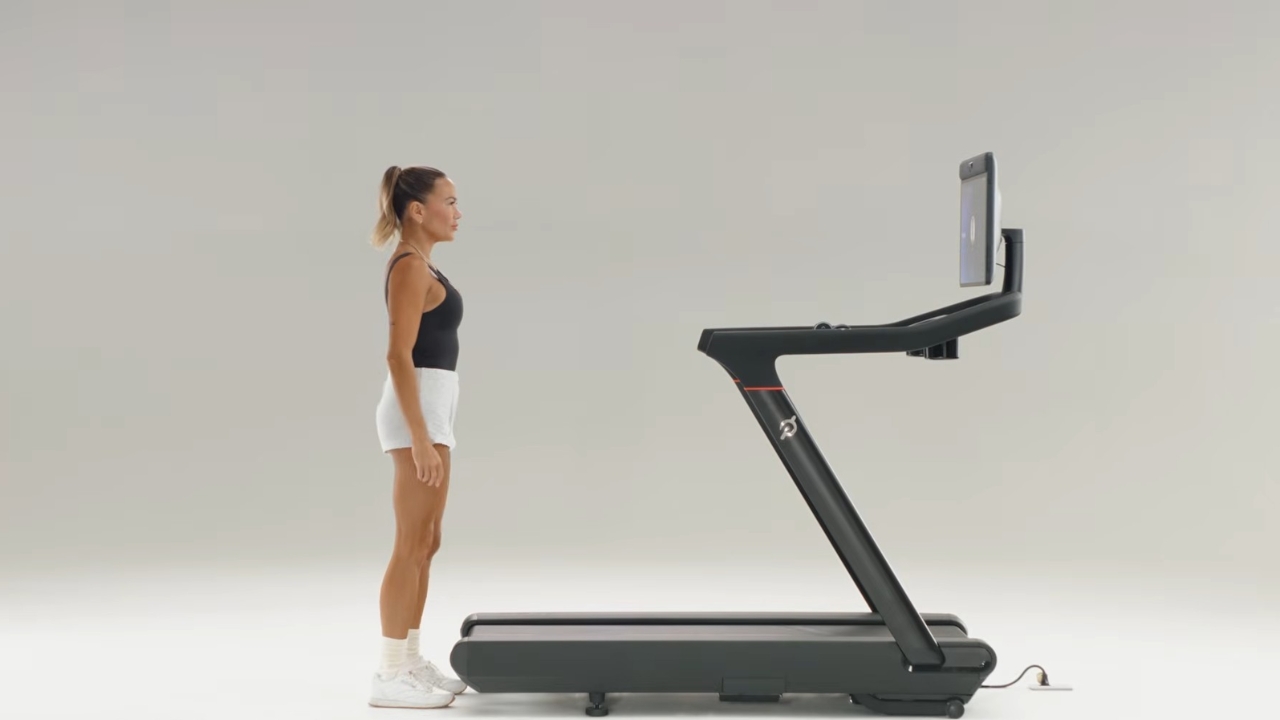
The $3,495 Tread Vision adds something Peloton clearly wants to become a larger part of its identity: computer vision.
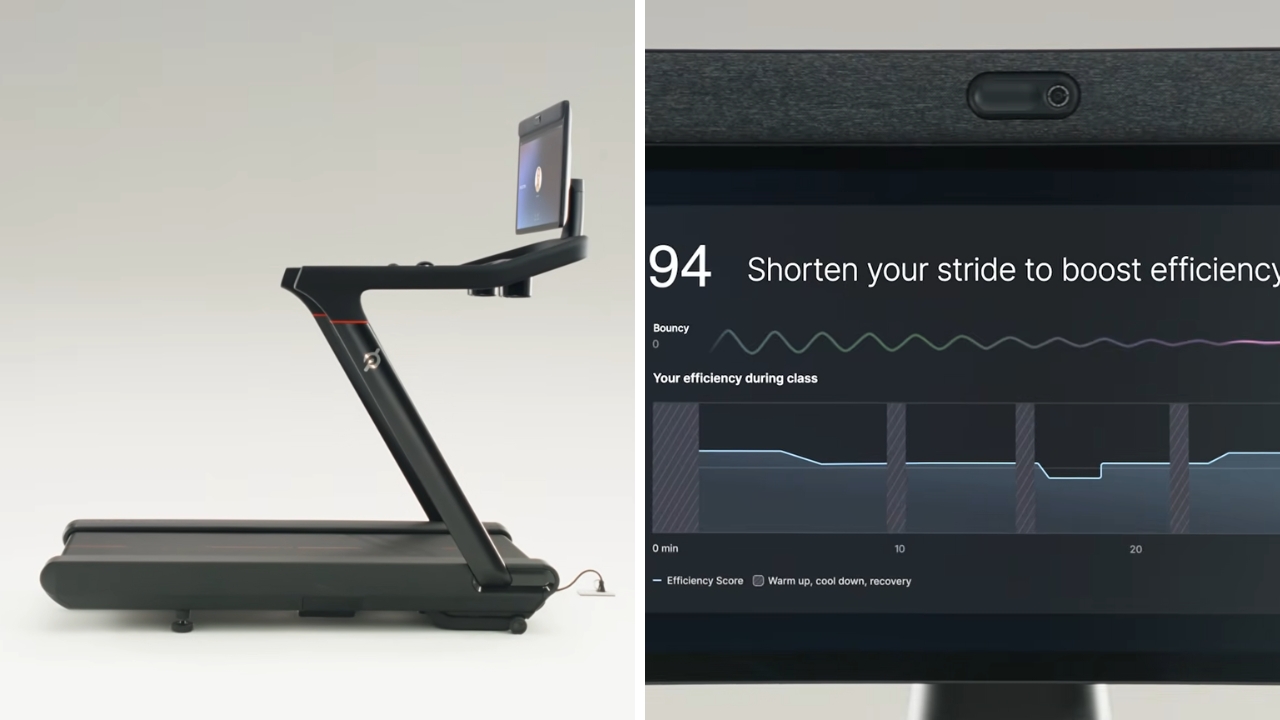
Its movement-tracking camera feeds Peloton’s new Run Analysis feature, which evaluates cadence, vertical oscillation, and stride length and converts those measurements into a running-efficiency score. Peloton then provides feedback intended to help the runner improve.
From a data perspective, this is fascinating.
From a runner’s perspective, I would keep the enthusiasm under control until we see how useful the feedback proves to be over time.
Cadence, stride length, and vertical oscillation are legitimate running measurements. The tricky part comes when complex movement gets condensed into a single score.
Humans love scores. Give us a number out of 100, and suddenly we have something to improve before breakfast.
Running economy is more complicated than that. Body size, speed, experience, terrain, fatigue, individual biomechanics, and the purpose of the workout all affect what “good” running form looks like.
A higher cadence is not automatically better in every situation, and lower vertical movement is not a universal instruction that every runner should chase.
The feature becomes useful if it helps people notice meaningful patterns. It becomes less useful if runners start trying to satisfy an algorithm with every stride.
That distinction will matter enormously.
Peloton IQ Is Becoming Just as Important as the Treadmill
View this post on Instagram
The hardware received the headlines, but much of Peloton’s running strategy actually lives in software.
Starting October 1, Peloton IQ will offer personalized pace targets based on recent performance. Heart Rate Zone Workouts will use compatible wearable data for Zone 2 training, while ReRuns can reproduce elevation changes from outdoor routes on a Peloton treadmill.
Zone-based cardio also fits within broader heart-health exercise guidelines that focus on regular aerobic activity across the week.
Peloton has also added WHOOP connectivity alongside its existing integrations with Apple Health, Fitbit, and Garmin Connect.
That gives Peloton access to a much larger audience, since fitness tracker and smartwatch ownership among U.S. adults is now close to 50%.
I think pace targets could quietly become one of the most useful features here.
Consumer enthusiasm for automated coaching remains limited. A 2026 Les Mills survey found that only 10% of respondents preferred an AI workout over a human-led session.
Traditional instructor-led treadmill classes have an obvious problem: “run fast” means completely different things to different people.
I’ve examined why the same workout feels harder for some people than others, and it explains why personalized pace targets make more sense than universal speed recommendations.
A 6 mph interval could be an easy aerobic pace for one runner and a hard effort for another. Personalized ranges based on the person’s previous training history make considerably more sense than pretending everyone watching the same screen has the same fitness level.
That is a good example of fitness data doing something practical rather than merely producing another graph.
The Tread+ Vision Is Almost a Different Category
At $6,695, the Tread+ Vision is not trying very hard to be a mass-market treadmill.
It retains Peloton’s cushioned slat-belt design and adds movement tracking, while Sled Mode lets users apply up to 300 pounds of resistance for pushing exercises. Peloton specifically connects that feature with HYROX-style training.
That tells me Peloton is watching the broader fitness market closely.
That market is also expanding: U.S. gym membership reached a record 81 million people in 2025.
Running and strength training are increasingly overlapping in consumer fitness. Hybrid competitions have made running-plus-strength training more visible, and Peloton is positioning its most expensive treadmill as something closer to an all-purpose training station.
Whether enough people want to spend nearly $7,000 on that proposition is another question.
You can buy a great deal of running shoes for $6,695. You could also replace those shoes frequently enough to become concerning.
Running Really Is Growing
Peloton is certainly talking up the running boom because Peloton would like to sell treadmills. Fortunately for the company, outside data supports the broader trend.
RunSignup reported that average U.S. race participation increased another 5% from 2024 to 2025, following growth of 8% in 2024 and 11% in 2023.
More than half of the country’s 100 largest road races in 2025 also exceeded their 2019 participation totals, according to the annual RaceTrends report.
RunSignup releases 2025 Top 100 Largest US Road Races! TCS NYC Marathon leads, followed by Chicago, BolderBoulder & more.
5.2% growth vs 2019 shows runners back strong!
21 races on RunSignup platform.
https://t.co/FP32Vtbbc2@RunSignupHQ #Top100Races #RunningBoom https://t.co/dhTjgVFJZC
— Endurance Sportswire (@endurancewire) January 12, 2026
Strava’s 2025 data makes the generational pattern particularly interesting. Compared with 2024, the share of Gen Z runners recording races increased 38% for 5Ks, 39% for 10Ks, 31% for half marathons, and 33% for marathons.
Strava also found Gen Z users were 75% more likely than Gen X users to identify a race or event as their primary motivation, according to its Year in Sport report.
I would not treat Strava users as a perfect representation of every runner. People who track activities on Strava are already a selected population.
Still, the pattern matches what race organizers are seeing.
Running has momentum. That growth also fits a broader national trend, with the U.S. inactivity rate falling to 18.7%.
That momentum is worth putting in context, because broader US teen physical activity data show a much less encouraging long-term trend.
Peloton Is Also Responding to a Business Problem
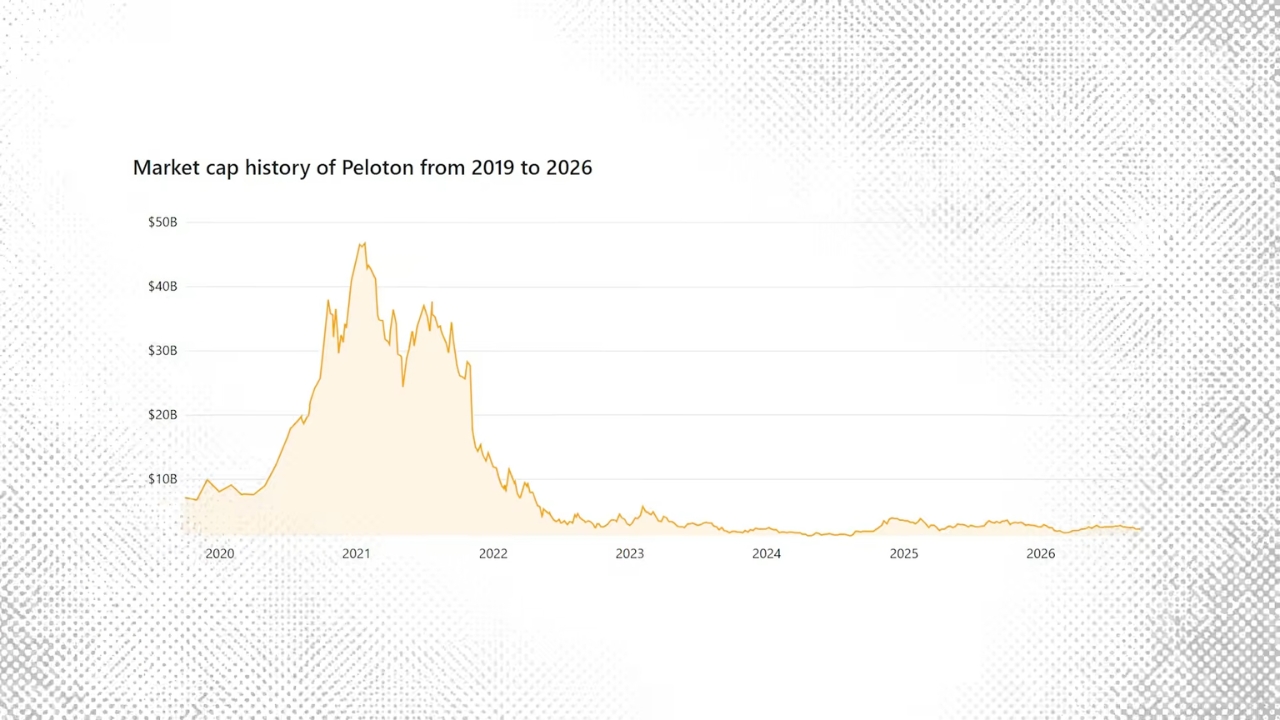
There is another reason Peloton needs a new growth story.
The company finished fiscal 2026 with 2.553 million paid connected-fitness subscriptions, down 247,000, or 8.8%, from a year earlier. Peloton simultaneously reported its first full fiscal year of GAAP net profitability, with $63 million in net income, according to its fiscal 2026 results.
That combination is important.
Peloton has become financially healthier while its connected-fitness subscriber base has continued shrinking.
So the challenge has changed. The company no longer needs to prove only that it can cut costs and improve margins. It needs compelling reasons for new people to enter the ecosystem.
Running gives Peloton a much bigger potential doorway than cycling alone.
Peloton says it already has more than 17,000 Tread-specific classes, and it is expanding race-training programs alongside the hardware launch.
The three-treadmill lineup then covers more of the market: people worried about space, runners interested in form feedback, and affluent users wanting premium hardware.
That segmentation looks deliberate because it is.
I Would Be Careful With Peloton’s “Faster Runner” Statistic
Peloton also highlighted an internal study showing that 56% of selected new Tread runners became faster within six months.
I would not read that as evidence that Peloton treadmills make 56% of people faster.
The analysis included 2,069 new Tread runners who completed at least three qualifying treadmill workouts during both their first and sixth subscription months.
“Faster” meant that their best average workout speed in month six exceeded their best average speed in month one. Peloton itself notes that the findings might not represent typical results.
There are several obvious reasons people could improve over six months simply from continuing to run.
Newer runners frequently improve. People still using the treadmill six months later are also a more persistent group than people who stopped exercising.
I still find the number encouraging. I just would not turn it into a causal claim.
That is the difference between an interesting statistic and an advertisement wearing running shoes.
The Bigger Bet Is on Personalized Running
I don’t think Peloton’s most important move here is launching three treadmills.
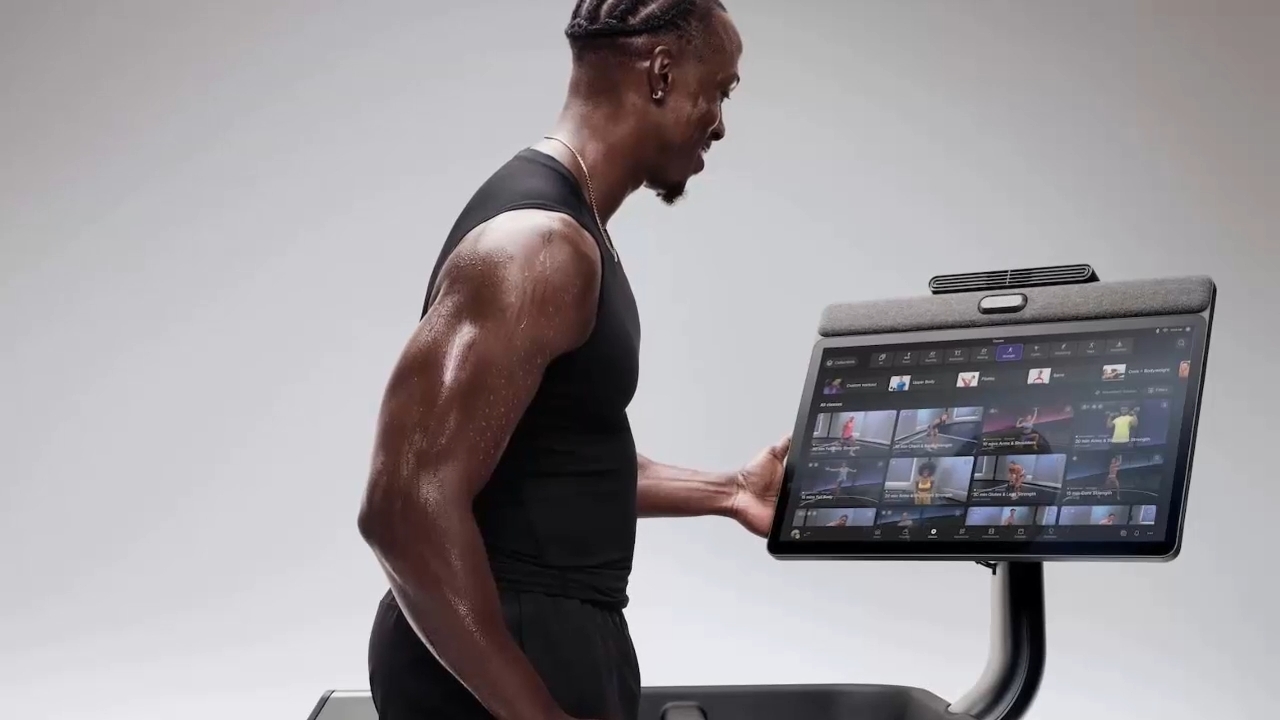
The company is trying to turn the treadmill into a personalized running platform.
The hardware measures more. The software remembers previous workouts. Pace recommendations adapt. Wearables feed additional physiological information into the system. Outdoor running can connect back to indoor training. The screen can follow you into strength sessions.
That direction makes sense.
At the same time, I hope connected fitness companies remember that successful running has never required particularly complicated technology. People improved at running long before treadmills could analyze vertical oscillation.
The best version of Peloton IQ will make good training simpler. It will identify useful patterns and then quietly help people make better decisions.
The worst version would give runners 14 new things to worry about while they are trying to put one foot in front of the other.
I suspect Peloton understands that distinction better than it did during the peak connected-fitness boom. Its new treadmill lineup is less about selling one expensive machine to everyone and more about meeting runners at several different levels.
Running is clearly becoming a bigger part of Peloton’s future.
Now we get to see whether runners want Peloton to become a bigger part of theirs.