
In this report
More than 200,000 people applied to participate in the 2026 Bank of America Chicago Marathon, setting a new application record for one of the world’s most prestigious running events.
The 48th edition of the marathon takes place on October 11, 2026, with organizers expecting more than 55,000 participants. That would also make it the largest field in the event’s history, according to the race organizers’ announcement.
I find the application number fascinating. More than 200,000 people expressed interest in running 26.2 miles, a distance that requires months of preparation and several hours of fairly uncomfortable physical activity.
Apparently, running a marathon has become something people are willing to compete for before they even get to the starting line.
More importantly, the record tells us something interesting about the growing appeal of organized running, although I wouldn’t automatically interpret it as evidence that Americans are becoming more physically active overall.
Chicago Marathon Applications Have Increased Dramatically
The 2026 application record follows another exceptionally strong year for the Chicago Marathon.
According to Bank of America’s announcement, more than 160,000 people applied for the 2025 event, which was itself a record. Now, the figure has passed 200,000.
View this post on Instagram
That’s a substantial increase in interest over a relatively short period. And the marathon is hardly an event that needed help attracting participants in the first place.
What interests me is that demand continues growing despite the commitment involved.
Training for a marathon requires more than deciding to become active. Runners generally spend months gradually increasing their mileage, adapting to longer distances, and arranging their schedules around training.
Even applying does not guarantee that someone will follow through with all that preparation, of course.
Still, the number suggests that the Chicago Marathon has become an increasingly desirable experience, even among people who know that participating will require considerable effort.
There Are Far More Applicants Than Available Places
Here’s another way to appreciate the scale of demand.
The event received more than 200,000 applications for a race expecting approximately 55,000 participants.
That’s more than three applicants for every anticipated participant. However, there’s an important distinction.
The application-to-field ratio is not the same as the lottery acceptance rate.
Chicago offers several entry routes, including guaranteed entry for qualifying runners, returning participants who meet certain criteria, charity runners, and international tour packages.
Other applicants enter a drawing for the remaining places.
Because the reported application total includes different entry categories, we cannot calculate someone’s actual lottery odds simply by dividing 55,000 by 200,000.
I’ve seen this kind of misunderstanding repeatedly with participation statistics. A large overall figure gets compared with a smaller one, and suddenly everybody thinks they know the probability of a particular outcome.
The numbers are still impressive. They just answer a different question.
They tell us how much interest the event attracts relative to its capacity, rather than the exact probability of being selected through the drawing.
Why Are So Many People Interested in Running Chicago?
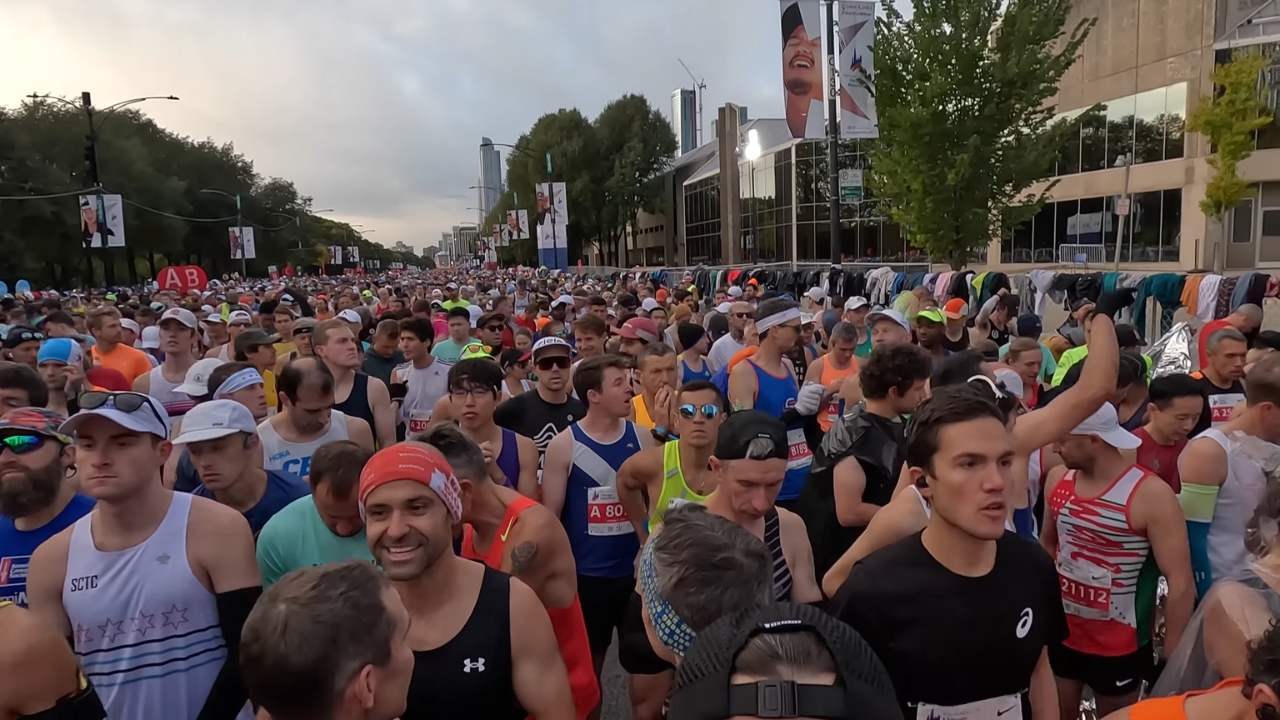
Chicago has several obvious advantages.
Its relatively flat course makes it attractive to runners chasing personal records. The route passes through 29 neighborhoods, drawing enormous crowds and creating an atmosphere that smaller races struggle to reproduce.
The marathon also belongs to the Abbott World Marathon Majors, giving it international prestige. But I think there’s something bigger happening here.
For many participants, completing a major marathon represents a personal achievement that extends well beyond exercise.
Someone might begin running to improve their fitness, eventually finish a 10K, progress to a half marathon, and then decide to pursue Chicago.
Suddenly, exercise has a concrete destination.
That progression makes sense to me. Having a specific goal can provide structure to training that otherwise feels repetitive.
There’s also a social element. Running clubs, online training communities, charity teams, and race-day spectators turn what is normally an individual activity into a shared experience.
A marathon medal is nice. Having thousands of people cheering you through the final miles probably doesn’t hurt either.
The commercial fitness industry has also recognized the appeal of running. As I discussed in my article about Peloton’s growing investment in treadmills, companies are increasingly treating running as an important category for attracting and retaining fitness customers.
Chicago’s application record fits that broader interest, even though one race cannot explain the entire running market.
Does the Record Mean Americans Are Running More?

I would be careful with that conclusion.
An increase in marathon applications demonstrates growing demand for a specific event. It doesn’t establish that running participation is rising at the same rate across the general population.
The applicants are a self-selected group. They are sufficiently interested in running to pursue entry into a major endurance event.
That makes them quite different from a representative sample of American adults.
There is independent evidence of broader growth in organized racing, however.
RunSignup’s 2026 RaceTrends findings reported that average participation per race increased 5% from 2024 to 2025 among the events analyzed.
That’s encouraging evidence for the recreational racing industry.
Yet race registrations and overall physical activity are different measures.
Interestingly, the latest figures on America’s declining inactivity rate also point to changes in exercise participation, although the underlying measurements tell a different story.
I think it’s important to keep those distinctions clear.
Growing participation in organized races can coexist with large numbers of adults who rarely exercise.
The popularity of endurance running among committed recreational athletes doesn’t necessarily mean the same enthusiasm has spread evenly across the population.
Running a Marathon Is Not Necessary to Be Healthy
One thing I always find interesting about endurance events is how easily they can distort our perception of what counts as meaningful exercise.
A marathon is an impressive physical achievement. Completing one generally requires considerable endurance training.
But the health benefits of physical activity don’t begin at 26.2 miles.
The CDC’s adult activity guidelines recommend at least 150 minutes of moderate-intensity aerobic activity each week, or 75 minutes of vigorous activity, alongside muscle-strengthening exercise on at least two days.
Wondering how much physical activity you need? For adults, aim for:
🚶♀️ Moderate-intensity activity (like brisk walking) for 150 minutes/week.
💪 Muscle-strengthening activities (like lifting weights) at least 2 days/week.
If that feels like a lot, start with just one walk, one class, or one active choice today.
It all adds up.
#StartWithOne #MoveMoreFeelBetter #PhysicalActivityForAdults
— CDC (@CDCgov) May 1, 2026
Brisk walking, jogging, cycling, and other activities can all contribute.
People can also benefit from doing less than the recommended amounts, particularly when moving from inactivity to some regular activity.
Personally, I think this distinction deserves more attention whenever major endurance events dominate fitness headlines.
Marathon participation is one measure of athletic ambition. It isn’t a requirement for good cardiovascular health.
There is also evidence that higher exercise volumes can produce additional benefits in some circumstances, something I examined in my article on exercise duration and heart health.
Still, the practical question is how much activity someone can maintain consistently, not whether they can eventually complete one of the world’s biggest races.
My Labrador is perfectly happy with our regular walks. He has shown absolutely no interest in registering for Chicago.
The Training May Matter More Than Race Day

Another aspect of the application record deserves attention.
A marathon lasts one day. Preparing for it can occupy a substantial part of someone’s year.
For participants who train consistently, the preparation means repeated aerobic activity, progressively longer runs, and developing the ability to sustain physical effort.
From a physical activity perspective, I find that more interesting than the number of finishers alone.
The race provides a goal, but the repeated exercise is where much of the training adaptation occurs.
Of course, applications don’t tell us how many people train successfully, how many experience injuries, or how many maintain their running habits afterward.
I’d love to see more long-term data examining whether participating in major races encourages people to remain active for years.
That would tell us considerably more about the lasting public-health relevance of marathon participation than application records alone.
Chicago’s Record Shows How Valuable Major Running Events Have Become
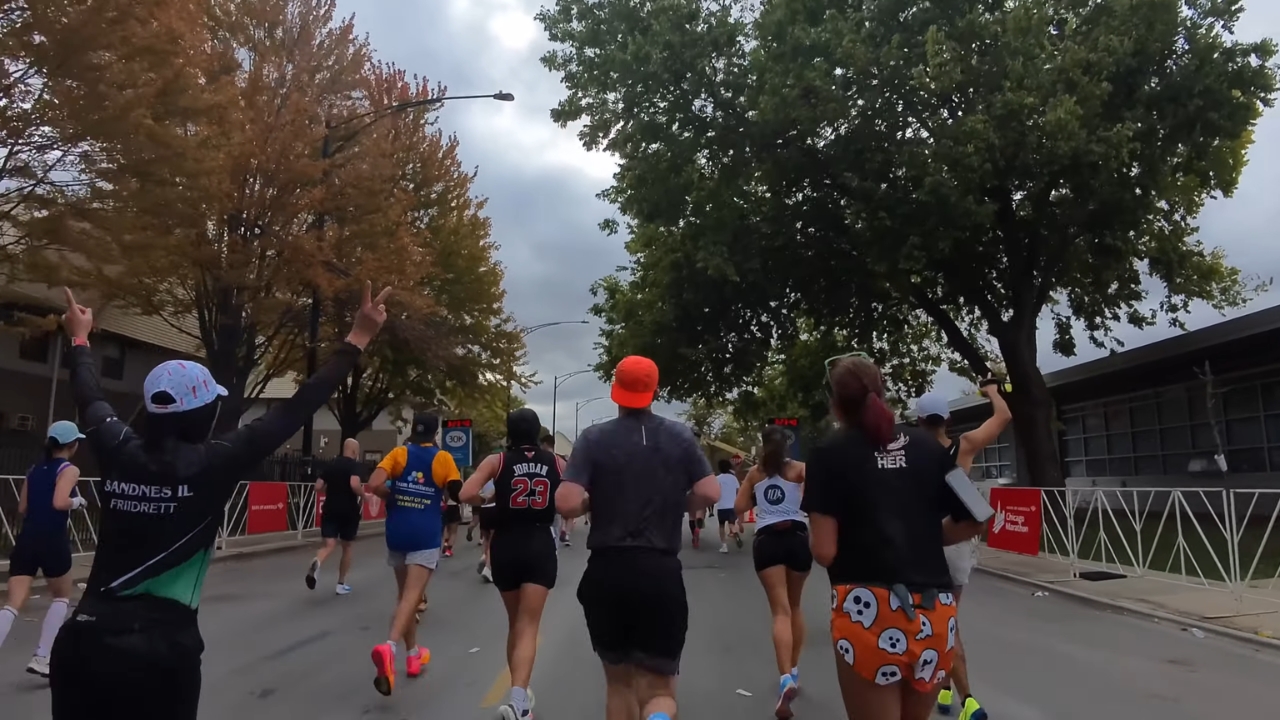
The enormous demand also creates a challenge for organizers.
A marathon cannot simply expand indefinitely. Roads, medical services, volunteers, transportation, starting areas, and course safety all impose practical limits.
And as major races become increasingly difficult to enter, runners who are unsuccessful in the draw must decide whether to pursue another event or try the following year again.
I hope some discover smaller local races in the process.
Major marathons offer extraordinary experiences, but plenty of excellent running events exist without international recognition or massive crowds.
There’s something appealing about a local marathon where the spectators might actually recognize you.
The Chicago record also illustrates how successful major endurance events have become commercially. Organizers estimated that the 2025 race generated $756 million in economic impact for the city, reinforcing the importance of participants and visitors to Chicago’s economy.
Running has become a serious business, even if the activity itself remains wonderfully straightforward.
What I Take Away From the Record
@chicagomarathon Ready, set, apply! As the excitement continues to build for the 2026 Bank of America Chicago Marathon this weekend, you know you’re going to want to experience it for yourself. Go for it. Submit your application now for the 2027 event. Link in bio. #GoForItChi27 ♬ Ready Set Go – Richard O’Connor & Nandi
More than 200,000 applications for the 2026 Chicago Marathon is a remarkable milestone, and I think it reflects genuine enthusiasm for endurance running and the experiences built around it.
It also illustrates the difference between measuring interest in a prestigious event and measuring exercise behavior across an entire population.
The first tells us something about motivation, ambition, and the appeal of organized sport. The second requires broader, more representative data.
I’m encouraged by the record because I like seeing people excited about physical activity, particularly when that excitement encourages months of consistent movement.
Still, the most meaningful achievement isn’t necessarily crossing the finish line in Chicago. It’s developing an active routine that continues long after race day.
That’s a result worth paying attention to, even when nobody is handing out medals.