
In this report
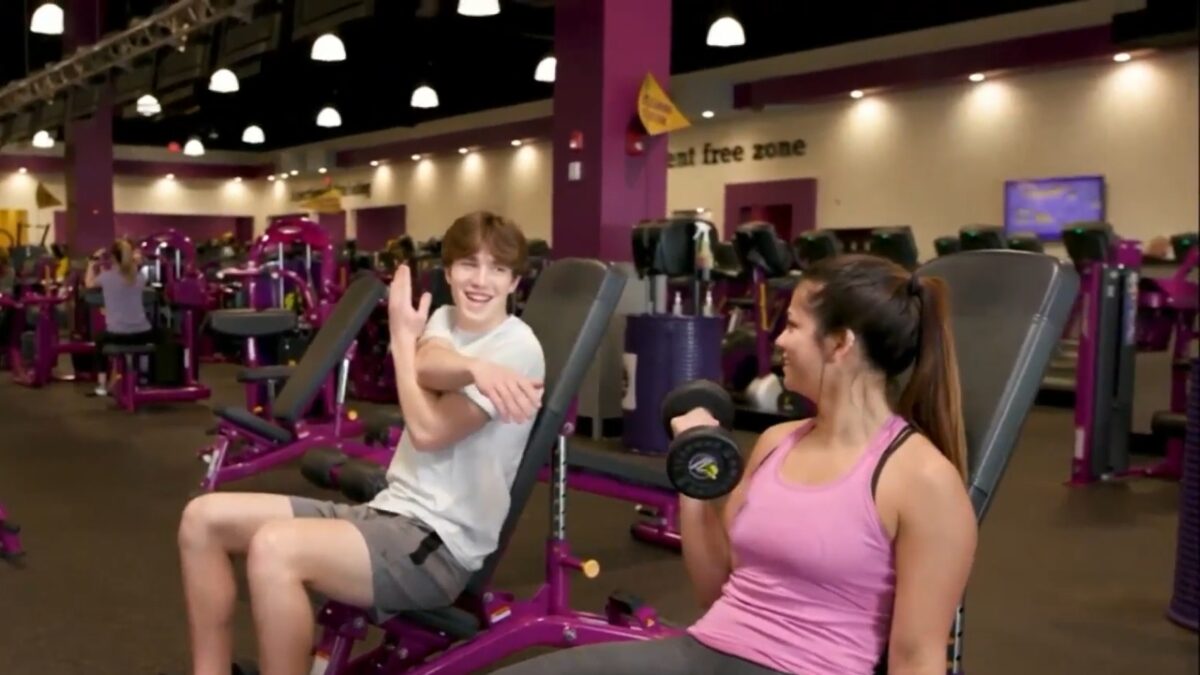
American teenagers logged more than 19.4 million free workouts at Planet Fitness during summer 2026, with approximately 3.7 million teens ages 14 to 19 participating in the company’s High School Summer Pass program.
According to Planet Fitness’s September 14 announcement, workout visits increased 2% compared with summer 2025, even though the number of participants remained roughly unchanged. The program ran from June 1 through August 31 at participating locations across the United States and Canada.
I find the workout total more interesting than the participation number. Signing up for a free gym membership is one thing. Actually showing up and exercising is another.
Still, 19.4 million workouts doesn’t automatically mean millions of teenagers developed consistent exercise habits. There’s a useful distinction between getting young people through the gym doors and keeping them physically active over time.
And the program’s numbers give us a surprisingly interesting look at both.
The Summer Program Has Grown Considerably Since 2024
Planet Fitness has offered versions of its free teen summer program since 2019. The latest results show just how much larger it has become.
Planet Fitness is bringing back its free Summer Pass, giving teens ages 14-19 free gym access. Here’s what to know.
According to the company, all high school summer pass participants will have access to Planet Fitness’ complete range of strength equipment, including machines, cardio equipment and stretching space.
Teens will also have access to free fitness training from certified fitness trainers, teen-specific workout plans, and the free Planet Fitness app featuring on-demand digital exercises.
Will you or a teen you know take advantage of this pass?
— FOX26Houston (@FOX26Houston) May 20, 2026
The company’s 2024 results reported nearly 3 million participants and more than 12 million workouts. In 2025, participation reached a record, with over 3.7 million teens completing more than 19 million workouts.
Here’s how the past three summers compare.
| Year | Teen Participants | Workouts Logged |
| 2024 | Nearly 3 million | More than 12 million |
| 2025 | More than 3.7 million | More than 19 million |
| 2026 | Approximately 3.7 million | More than 19.4 million |
Source: Planet Fitness annual program announcements. Figures are rounded as reported by the company.
The increase since 2024 is substantial. Still, I wouldn’t describe 2026 as another huge growth year.
Participation was essentially flat compared with 2025, and workout volume increased by just 2%.
That’s not disappointing. Maintaining participation at this scale is an achievement. It simply suggests that the program’s explosive recent growth has slowed.
I’d rather see the company concentrate on getting existing participants to exercise regularly than chase another impressive enrollment record.
The Average Teen Logged About Five Workouts
Here’s the calculation I find particularly revealing. Dividing 19.4 million workouts by approximately 3.7 million participants gives us about 5.2 workouts per participant across the entire summer.
That’s roughly five gym visits over three months.
It doesn’t mean the typical participant exercised five times. Some teenagers probably visited frequently, while others attended only occasionally. The published totals don’t show how visits were distributed.
There’s an interesting discrepancy worth examining. In a July survey announcement, Planet Fitness said more than 80% of surveyed participants were visiting the gym at least twice weekly.
That’s a considerably different picture from the program-wide average.
Both figures can be correct because the survey covered a subset of participants during July, whereas the final workout total covers the full summer. The survey also doesn’t establish how representative its respondents were of everyone who registered.
After years of looking at exercise participation data, I’ve learned that frequency matters just as much as participation.
Five workouts can introduce a teenager to exercise. A consistent weekly routine has a much better chance of becoming a lasting habit.
Nearly 58% of Surveyed Teens Were First-Time Gym Users
One result genuinely encouraged me. According to Planet Fitness, nearly 58% of surveyed participants said summer 2026 was their first experience working out at a fitness club. I think that deserves more attention than it received.
View this post on Instagram
Gym participation statistics can reflect people moving between facilities. Someone switching from one gym to another doesn’t necessarily represent an increase in physical activity.
Introducing someone to a fitness facility for the first time is different.
The High School Summer Pass offered teenagers access to more than 2,900 participating locations, cardio equipment, strength machines, training assistance, and digital workout resources.
Removing membership fees eliminates one obvious obstacle. It doesn’t solve everything, though.
A teenager still needs transportation, time, a convenient location, and enough confidence to use unfamiliar equipment.
I suspect those practical barriers determine who benefits most from programs like this. Making exercise free is valuable. Making it convenient and approachable is just as important.
The Mental Health Numbers Are Encouraging, With Some Limitations
Planet Fitness also reported several positive psychological outcomes.
Among surveyed participants:
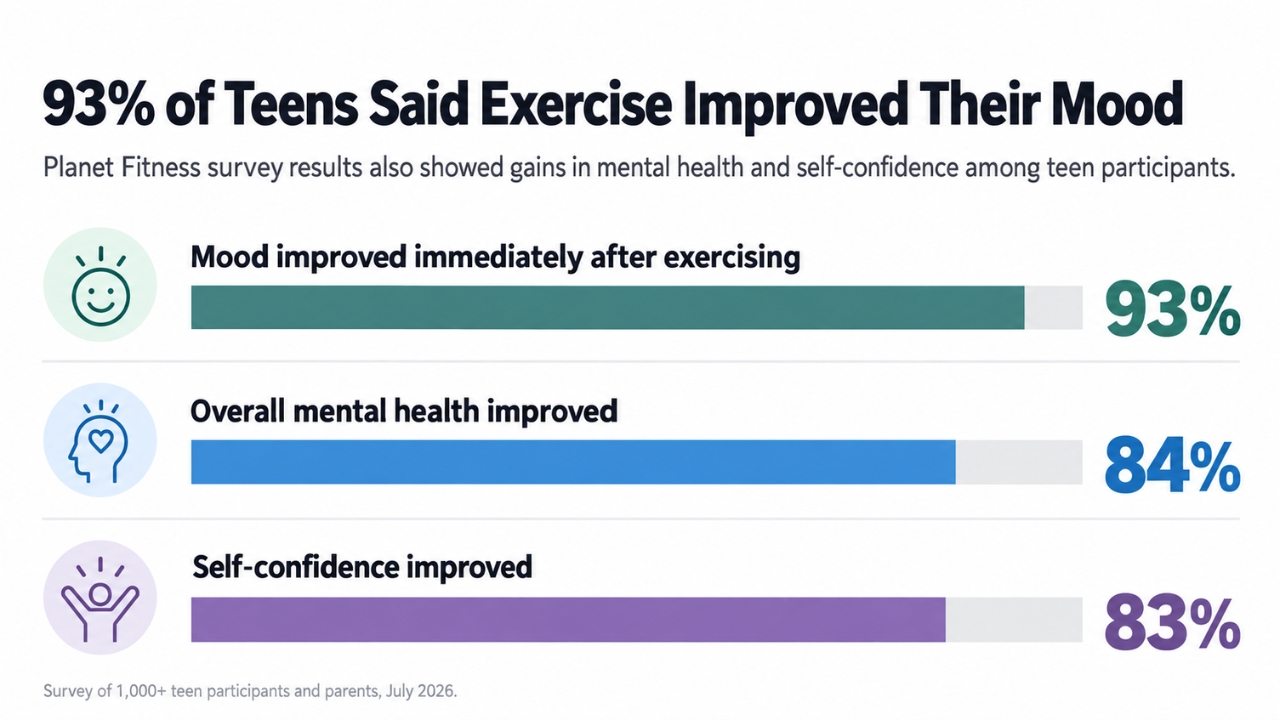
I can see why the company highlighted those figures.
For teenagers dealing with academic pressure, social expectations, and changing routines, discovering an activity that makes them feel better is meaningful.
However, I would be careful about describing these percentages as proof that the program caused improvements in mental health.
Planet Fitness based its findings on a survey of more than 1,000 teen participants and parents conducted July 13–21, 2026.
Respondents described their own experiences. The survey wasn’t a controlled experiment comparing participating teenagers with a comparable group who didn’t join.
We don’t know how much of the reported improvement came specifically from gym access, existing exercise habits, social interaction, or other circumstances. That doesn’t make the responses worthless.
The broader CDC guidance on youth physical activity recognizes mental-health benefits from regular movement, including reduced depressive symptoms.
I simply prefer keeping two ideas separate: exercise has established mental-health benefits, and these particular percentages describe what participating teenagers reported.
The second claim shouldn’t be stretched further than the survey supports.
Teenagers Are Making Gym Workouts a Social Activity
Another interesting finding concerns who teenagers exercised with.
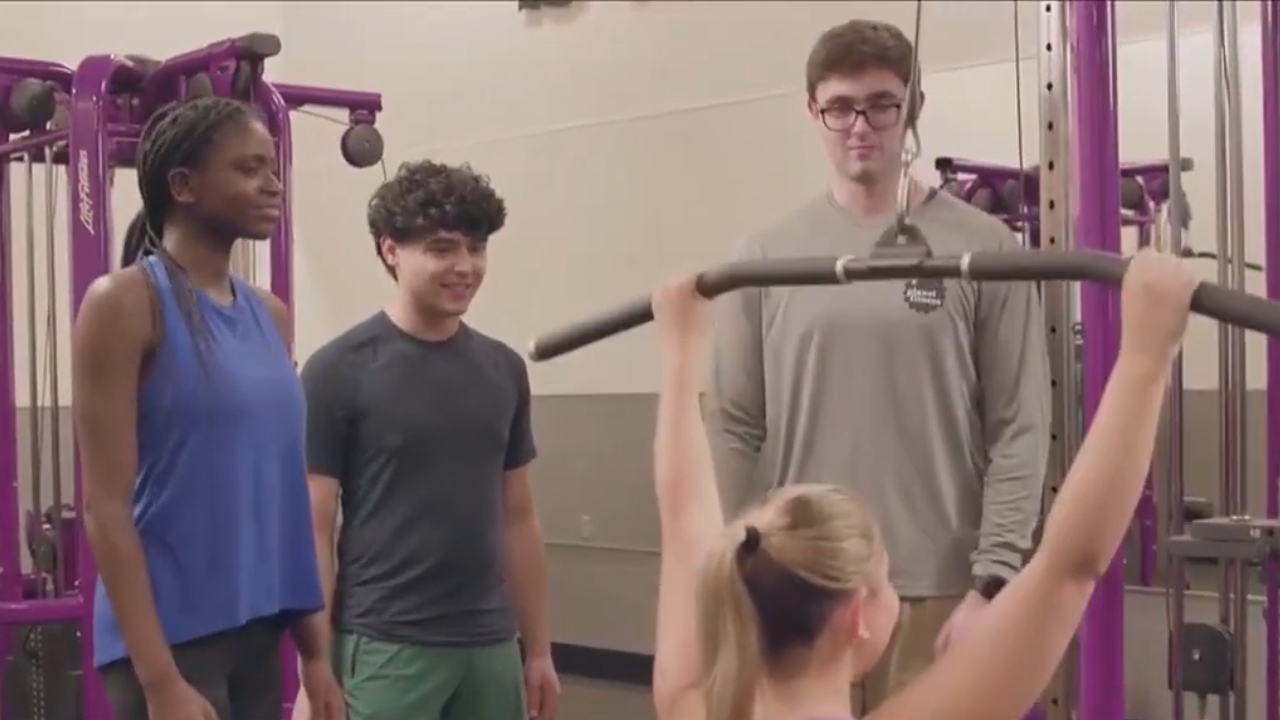
Planet Fitness reported that 53% of surveyed teens regularly worked out with a friend, 20% with a sibling, and 15% with a group of friends.
Meanwhile, 42% of surveyed parents said they worked out alongside their teenagers, and 67% reported that their teen’s participation had inspired other family members to become active.
I find the social component particularly promising.
Exercise advice tends to concentrate on motivation, discipline, and personal responsibility.
Those things have their place. But having someone who wants to exercise with you can make participation feel much less demanding.
A gym visit becomes something friends do together rather than another obligation competing for attention.
Of course, the survey cannot tell us whether exercising with friends actually increased attendance.
Still, I think programs trying to improve youth participation should pay more attention to the social experience.
Teenagers don’t necessarily need to become fitness enthusiasts. Sometimes they need an activity they enjoy doing with people they like.
The Bigger Problem Is That Most American Teens Still Don’t Exercise Enough
Here’s where the Planet Fitness announcement meets a less encouraging national statistic.
According to the CDC’s 2025 youth activity data, only 25% of American high school students reported being physically active for at least 60 minutes every day.
Only 25% of boys and 15% of girls achieve 60 minutes of daily physical activity. Our findings show a significant decline as adolescents age, with boys being more active than girls. Learn more from our latest report with @WHO_Europe: https://t.co/BzA7lBSS1W https://t.co/RgCIl5DkHv
— HBSC Study (@HBSCStudy) May 22, 2024
Just 16% met both the aerobic and muscle-strengthening recommendations. Our earlier analysis of declining teen physical activity also found that four major physical activity measures worsened between 2015 and 2025.
That contrast is worth thinking about. Millions of teenagers are visiting gyms during summer vacation, yet the broader population continues to struggle with regular physical activity. Both observations can be true.
Gym Workouts Are Only One Part of Daily Activity
Federal guidelines recommend that children and adolescents ages 6–17 accumulate at least 60 minutes of moderate-to-vigorous activity daily.
That doesn’t require an hour inside a gym.
Walking, cycling, swimming, sports, active games, and other movement can all contribute.
Swimming also requires access to lessons. Yet nearly 40 million American adults say they cannot swim, according to CDC data. A free gym pass cannot solve that problem.
An enjoyable strength-training session twice weekly can be useful, but it doesn’t replace the wider need for regular movement.
Personally, I think we’re too quick to measure young people’s fitness through organized exercise alone.
A teenager who walks or bikes regularly, plays recreational sports, and stays active outdoors might accumulate considerable physical activity without ever entering a fitness club.
Gym access should complement those opportunities, not become the only measure of an active lifestyle.
The revived Presidential Fitness Test raises a similar issue in schools: Fitness assessments can measure student performance, but they cannot replace regular opportunities for physical activity.
Strength Training Is a Useful Introduction, Not a Competition
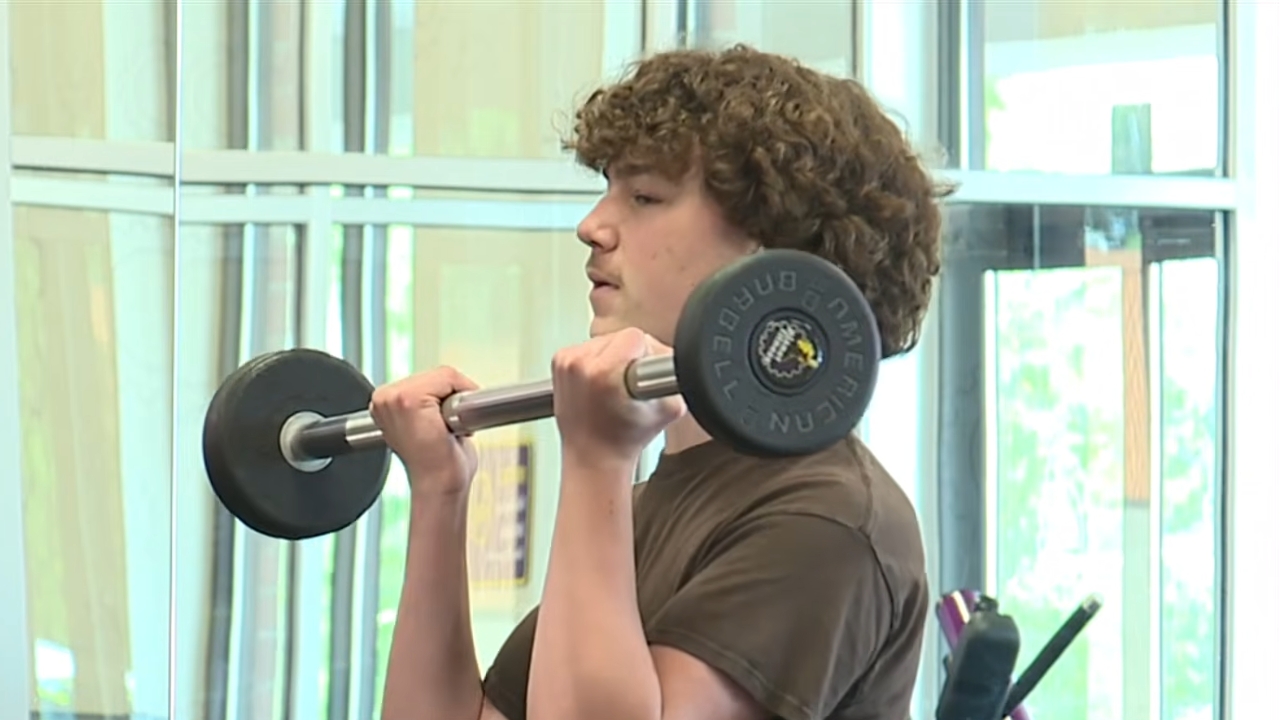
One aspect of the program I particularly like is that teenagers can become familiar with strength training in an actual fitness facility.
There’s still some confusion around whether young people should lift weights.
The American Academy of Pediatrics supports appropriately supervised youth resistance training, emphasizing proper technique, gradual progression, and age-appropriate instruction.
The important part isn’t lifting impressive weights.
It’s learning how to move, building strength safely, and developing confidence with exercise.
I’d much rather see a 15-year-old learn basic resistance exercises with qualified guidance than feel pressured to copy an advanced bodybuilding routine from social media.
A successful introduction should make exercise feel manageable enough to continue.
Can a Free Summer Membership Become a Year-Round Habit?
Planet Fitness says it has provided more than $620 million in waived membership dues since introducing the program in 2019.
That’s the company’s estimated value of free memberships, rather than a measure of actual spending or revenue the company would otherwise have collected.
It’s an impressive figure, though I’d argue the program’s long-term results matter considerably more.
The free access ended August 31. What happens after that is the question I would most like answered.
We still don’t have enough publicly reported data to establish:
- How many teenagers continue exercising regularly after summer.
- How many transition into paid memberships or other activities.
- Whether first-time gym users remain active six or twelve months later.
- How participation differs by age, gender, income, and location.
Those measures would tell us much more about lasting behavioral changes than another summer enrollment record.
There’s also a wider industry connection. The United States reached a record 81 million fitness facility members in 2025, with young adults ages 18–24 showing particularly high membership participation.
Introducing teenagers to gyms could help sustain that interest as they enter adulthood. The current program data, however, cannot establish that connection.
My Takeaway From the 19.4 Million Workouts
I consider the 2026 High School Summer Pass results genuinely encouraging.
Millions of teenagers accepted an opportunity to exercise, first-time gym users discovered fitness facilities, and many surveyed participants described positive experiences.
That’s worth celebrating.
But I wouldn’t declare the program a long-term public-health success based on summer workout totals alone.
The real achievement would be turning temporary access into sustainable physical activity, regardless of whether teenagers eventually return to Planet Fitness, join another gym, play sports, or find a completely different way to stay active.
Nineteen million workouts make an excellent headline.
I’d be even more interested in learning how many of those teenagers are still exercising regularly next summer.